

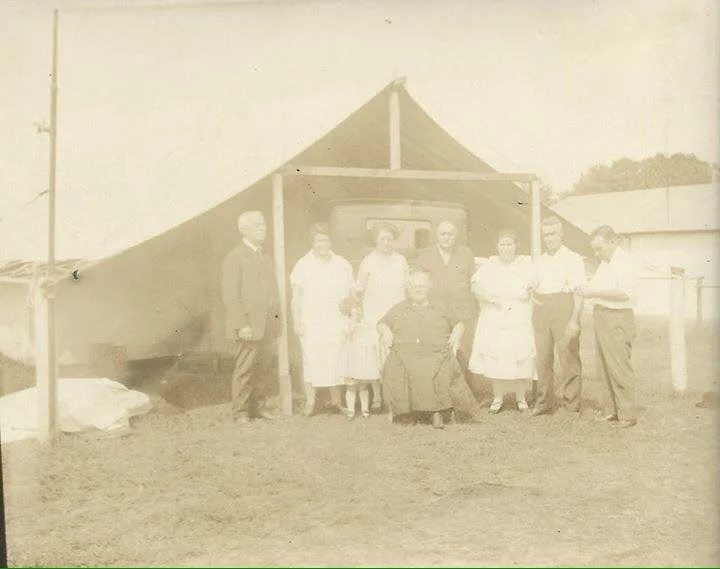
126 years of family, summer tradition.
Buttonwoods is a summer cottage community established in 1899 on Greenwich Bay in Warwick, Rhode Island.
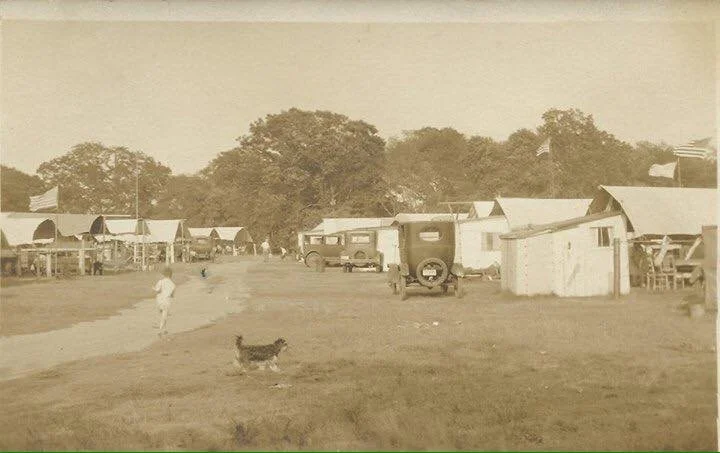
Abutting Old Buttonwoods directly to the west is Budlong Farm, home to the Buttonwoods Campers Association, a summer colony established around the turn of the 20th century.
The Budlong and Greene families were among the original settlers of Warwick, Rhode Island, alongside families such as Gorton, Lippitt, and Potter. The Greenes owned much of the Nausauket neck, which was gradually divided among generations of Budlong/Greene heirs.
One of the area’s historical landmarks, the original Greene/Budlong farm homestead, was built in 1776 and still stands today, visible from Buttonwoods Avenue.
The Birth of Buttonwoods Campgrounds (circa 1899)
As land was sold off over time—including a tract to the Buttonwoods Beach Association—Henry Warner Budlong inherited the remaining Greene family lands. He was approached to develop a summer colony akin to Buttonwoods Beach, but aimed at middle-class families.
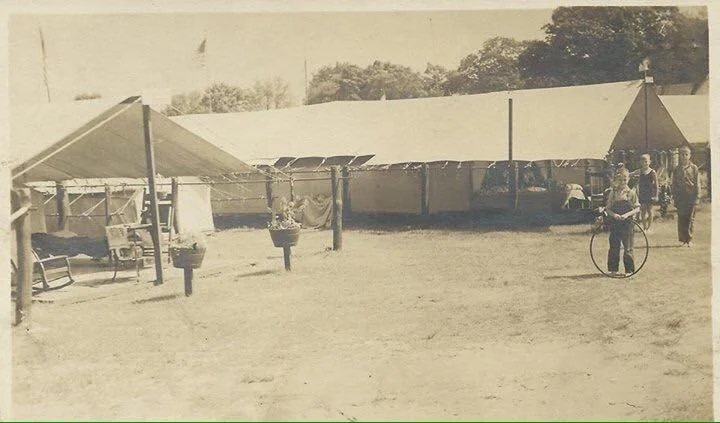
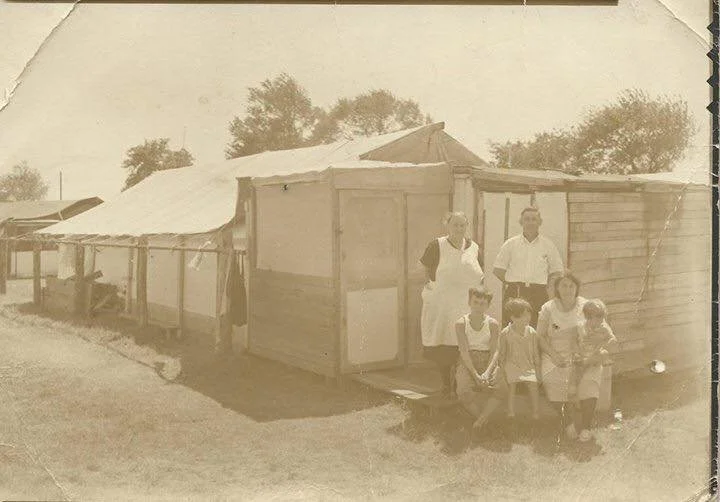
Around 1899, Budlong established the Buttonwoods Campgrounds, allowing families to erect long tents (reportedly Civil War army surplus) and enjoy summers along Greenwich Bay.
Legacy of Henry Warner Budlong
A lifelong bachelor with no heirs, Budlong left the majority of his estate to his housekeeper, Emily I. Hohler, in his 1928 will (he passed in 1929). However, he stipulated that after her death, the land would not go to her heirs but would instead be donated to the Metropolitan Park Commission of Rhode Island, to be turned into a memorial park named The Greene Park, in honor of his mother, Rhody Knight Greene.
The Will Contested and Resolution
When Mrs. Hohler died on October 31, 1964, her daughters, Alice Hohler and Hope Maynard, along with summer residents (“campers”), contested the will.
A key figure in this legal effort was William McCaughey Jr., who successfully obtained a stay of possession from then-governor John Chafee. The state agreed to postpone enforcement while a solution was sought.
The Hohler/Maynard families, with financial support from campers, purchased an equivalent tract of waterfront land and donated it to the state and the City of Warwick, fulfilling Budlong’s intent. This land was added to other municipal properties to form what is now Warwick City Park.

Present-Day Buttonwoods Campers Association
Today, the Buttonwoods Campers Association, Inc.:
Leases approximately 25 acres from the Hohler/Maynard families
Is home to 120 cottages
Maintains a community hall used for social events and activities for all ages
Recent capital improvements include:
A basketball court
A soft sand volleyball court
A bocce court
A children’s playground
Despite beach erosion—caused by a FEMA-financed seawall built to protect Old Buttonwoods’ shoreline—the area continues to thrive with a mix of families and snowbird seniors.
Preservation and Continued Use of Budlong Farm
The entire Budlong Farm spans roughly 60 acres, a portion of which is still actively farmed for corn by Confreda Farms.
To preserve its legacy, the land has recently been placed under the Rhode Island Farm, Forest and Open Space Act, with a formal pledge to remain undeveloped.
Today, Budlong Farm and the Buttonwoods Campers Association offer a rare glimpse into both colonial and late Victorian-era Rhode Island, serving as a living snapshot of a bygone time.